You must have routine sanitation based upon risk factors, operational volume, allergen concerns, and health inspections, combined with documented records supporting HACCP compliance, regulatory audits, and public health standards. The following sections detail critical cleaning system elements.
Essential Summary
- Brampton's food safety cleaning experts clean for restaurants, grocery departments, commissaries, warehouses, bakeries, schools, mobile vendors, and allergen-sensitive operations.
- Compartmentalized approaches treat frequently contacted areas, food-contact equipment, kitchens, floors, drains, restrooms, and storage areas for eliminating cross-contamination.
- Recording of finalization through tests, assessments, and correction logs validates qualified vendors have verified proper chemical concentration, alignment, and contact time.
- Risk, throughput, format changes, accidents, and requirements should inform maintenance calendars, with regular, weekly, and cyclical tasks designated by location.
- Prioritize suppliers showing HACCP, public-health knowledge, WHMIS instruction, coverage, testimonials, colour-coded implements, and compliance-ready cleaning files.
Food Safety Cleaning Requirements for Brampton Facilities
You must follow food safety cleaning if your establishment is regulated by public health inspection, food premises regulations, or internal HACCP-based controls. This covers dining establishments, employee cafes, distribution hubs, market sections, meat shops, fish stands, retail outlets, and food service kitchens.
Adherent hygiene cleaning is furthermore required in warehouses, food manufacturing plants, cold storage sites, retail bakeries, school nutrition programs, banquet halls, and meal delivery hubs. Mobile and temporary operations are included, such as catering trucks, festival vendors, and pop-up food booths. Your facility demands written cleaning standards should your employees work with ingredients, section finished dishes, heat items, or keep allergens organized. In Brampton, sanitation continues to be not optional; it constitutes lawful, operational, and customer protection adherence.
Which Areas Do Brampton Cleaning Experts Cover?
You require experienced cleaning professionals who sanitize frequently touched areas, cooking areas, flooring, and restroom facilities to maintain food safety and public health requirements. These areas are targeted due to their high cross-contamination potential, slip and fall dangers, and health code violations.
If you grasp what they sanitize, you'll be able to confirm your operation satisfies all operational and regulatory compliance needs.
Emphasizing High-Touch Surface Disinfection
organize sanitization schedules according to traffic, contamination risk, and operational use.
ensure effective cleaning
Kitchens, Floors, and Restrooms
Expect Brampton cleaning experts to target kitchens, floors, and restrooms because each area carries unique foodborne illness prevention, slip-and-fall, and public health risks. In industrial kitchens, you need degreasing on cook lines, equipment exteriors, drains, prep surfaces, and splash zones to reduce contamination and pest pressure.
Professional floor care with documentation is also included. is also provided as part of the service.
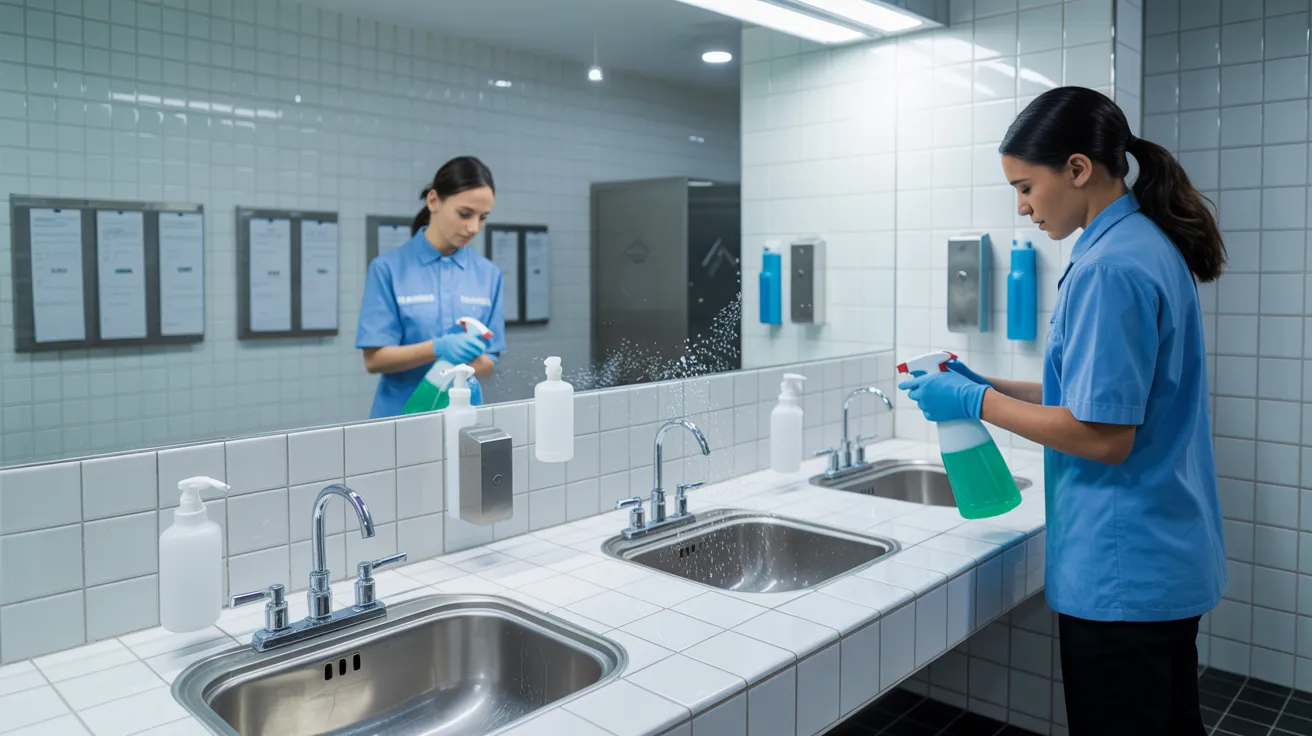
Restroom sanitation involves disinfecting surfaces, fittings, separators, dispensers, and containers, replenishing amenities and managing odor. They also service restaurant moprooms, where chemical storage, sink hygiene, and drainage conditions can affect sanitation compliance and staff safety daily.
The Importance of Food Safety Cleaning in Brampton
In Brampton, you must maintain food-safe cleaning standards to meet health code requirements and achieve compliance. You also minimize cross-contamination by cleaning and sanitizing food-contact surfaces, equipment, and high-touch areas correctly. Most importantly, you help protect public health by lowering the risk of foodborne illness in your facility.
Regulatory Code Requirements
Food operations in Brampton face strict public health standards, making food safety cleaning essential to meeting health code requirements, protecting patrons, and avoiding enforcement action. You must maintain sanitized food contact points, documented cleaning schedules, correct sanitizer application, and documented employee protocols that meet municipal and provincial inspection expectations.
Inspectors assess your operation to determine that your cleaning program maintains protected inventory management, equipment sanitation, trash control, and washroom maintenance.
Cross-Contamination Avoidance
Meeting health code standards also depends on your capacity to stop cross-contamination during daily food handling and cleaning. You must keep raw items away from prepared dishes, sanitize prep surfaces between tasks, and keep cleaning products separate from food areas. Clear procedures reduce transfer risks and ensure ongoing adherence to health checks.
You might establish allergen separation to stop main allergens from reaching common areas, containers, or machinery. Apply separate boards, color-marked equipment, and strict utensil labeling so team members avoid blending products during preparation or service. Enforce washing hands following uncooked meat, fish, egg products, or allergens. Change wiping cloths regularly, and check sanitizer strength with test strips. When employees learn these procedures every shift, you develop a more sanitary, secure business that matches Brampton's safety requirements every day.
Public Wellness Protection
Should cleaning standards collapse, you don't simply encounter inspection problems—you increase the potential of contamination-related sickness impacting customers, staff, and the wider Brampton population. You also weaken your role in safeguarding community wellness, especially in busy food facilities where contamination can spread quickly through surfaces, equipment, and touchpoints.
You depend on sanitation protocols that eliminate contaminants, effectively sanitize, and ensure effectiveness. This entails adhering to contact periods, deploying approved disinfectants, recording schedules, and training employees to fulfill compliance standards. These actions support disease prevention by reducing microbes before affecting food surfaces or hands. In Brampton, robust sanitation protects at-risk groups, curtails outbreak likelihood, and demonstrates accountability. When you adhere to proper protocols, you go beyond regulations—you meaningfully lower danger and advance safer food handling throughout the city.
How Does Cleaning Support Food Safety Compliance?
Establishing rigorous cleaning routines improves food safety compliance by minimizing contamination hazards, managing pathogen expansion, and ensuring your facility complies with sanitation requirements under HACCP-based programs and public health regulations. You confirm that food-handling surfaces appear visibly clean and microbiologically controlled, facilitating documented preventive controls and inspection readiness.
Rigorous cleaning standards also enhance allergen prevention by removing residues that can trigger undeclared allergen exposure.
What's the Ideal Time to Schedule Commercial Cleaning?
accumulate pollutants. Increase frequency
Drains, vents, storage racks, and hard-to-reach equipment zones require weekly or every month cleaning, guided by inspection data and sanitation logs.
Finding Quality Brampton Cleaning Experts: A Guide
Begin by evaluating providers based on sanitation compliance standards—not solely on price alone. You should confirm that each organization comprehends CFIA, public health, and HACCP-based requirements applicable to your facility. Request proof of insurance, WHMIS compliance, staff training documentation, and oversight procedures. Assess whether technicians recognize cross-contamination risks, chemical handling protocols, and verifiable sanitation records.
Additionally, you need to evaluate operational reliability and accountability. Obtain references from Brampton food operations, then review service speed, corrective-action procedures, and communication practices. Verify the company supports supplier audits and can deliver compliance-ready records when inspectors or external parties need proof. Verify equipment upkeep, color-coded equipment are applied correctly, and site-specific hazards are identified. A capable service protects compliance, product quality, and your brand reputation.
What details should a sanitation plan include?
Create a documented strategy that clearly outlines every sanitation task, standard, and responsibility before production professional advice starts. You should list cleaning schedules, authorized products, mixing ratios, exposure periods, equipment, and testing procedures for each area, section, and machine. Be sure to include pre-operational inspections, corrective actions, and employee training requirements.
Your plan should also cover cross-contamination controls, waste handling, pest-prevention measures, and documented schedules for bathrooms, drainage systems, surfaces, and food-preparation zones. Explain how you'll separate raw and ready-to-eat processes, enable ingredient tracking, and maintain accurate allergen labeling through validated cleaning between product changes. You should designate accountability, keep signed records, and review results against regulatory standards, HACCP controls, and customer requirements. When gaps appear, revise procedures immediately and retrain staff.
Popular Inquired Inquiries
Are sanitation providers available for overnight shifts in Brampton properties?
If you manage regulated spaces, you'll also require records that support audits and ensure compliance.
Will Brampton cleaning experts address emergency spills?
Yes, you can discover many Brampton sanitation experts providing spill response options. They manage contamination, assess dangers, contain affected zones, and initiate rapid cleanup to reduce risk and prevent business disruption. You should verify response rates, certifications, PPE measures, and disposal methods. If your facility must meet compliance standards, select a service that documents events, adheres to standards, and supports verification.
Can plant-based disinfectants be used safely on food-handling equipment?
Absolutely, green disinfectants can be suitable for food-contact surfaces when you choose solutions certified for food use and complying with regulations. You must check contact times, dilution rates, and rinse procedures before use. Botanical formulations reduce chemical burden, though you should gather demonstration of efficacy against relevant pathogens. For preserving residue-free areas, follow exact manufacturer guidelines and confirm the disinfecting agent complies with food sanitation requirements.
Can maintenance plans be customized for seasonal production changes?
Certainly, maintenance plans adapt to seasonal variations well. Adjust frequencies, staff levels, disinfectants, and testing procedures to match with operational cycles while upholding regulatory compliance. Lower production downtime by timing sanitation during production shifts, maximum output, and usage patterns. Additionally modify SSOPs, employee training, and environmental testing to account seasonal hazards, emerging allergens, or higher contamination levels. Periodic assessments ensure the plan efficient.
Do commercial cleaning providers instruct your team in proper hygiene techniques?
Indeed, professional cleaners typically provide staff training on sanitation best practices. Your staff receives training on proper chemical use, exposure durations, cross-contamination prevention, equipment breakdown, and record-keeping. They generally adhere to instruction with HACCP, GMP, and CFIA or local public health criteria. Many also execute sanitation audits to confirm standards, identify gaps, and strengthen improvement measures. This supports you in maintain consistent procedures, achieve compliance, and reduce food safety risks on a daily basis.
Summary
When you partner with Brampton food safety and commercial cleaning specialists, you don't just tidy up—you maintain your facility inspection-ready and your protocols above board. From kitchens to processing floors, every polished surface and maintained area helps reduce pest intrusion and prevent costly setbacks. By scheduling service at the proper frequency and adhering to a detailed cleaning schedule, you protect staff, patrons, and your brand image. In a strict regulatory setting, clean spaces aren't optional—they're fundamental to proper operations.